

I debated where the best place to put this thread would be- whether it belonged in the DIY section or somewhere else. But for a number of reasons I think it does belong here...
This is about a friends system in Munich, in which a lot of research and trial and error testing has gone on, both to optimize the performance of some of the electronics using auxiliary power systems that can only be called "DIY" compared with what came from the factory.
This is also about listening tests with different equipment substitutions that we did while I was there last week, which were not completed as expected, due to my kidney stone issue, but which were nevertheless intriguing and sometimes startling- and actually never subtle. For anyone configuring their own system, and wanting the best from their speakers, there are lessons at least of examples, if not specifics, to be learned.
This is NOT intended so much as any kind of absolutist equipment recommendation, or even a recommendation for a specific set of DIY mods- how I would like it to be considered is an anecdotal tale about one path that worked well with certain kinds of euipment (probably for rather specific reasons, which I will get to at the proper point), but most especially, a tale about not making assumptions based on component specifications or cost, but realizing that there is no worthwhile substitute for a lot of listening and sometimes a lot of experimentation to get to where you may want to be in your personal quest for musical nirvana. (Those of you looking for musical hell, this isn't your thread, these aren't the components you're looking for, move along now...) :W
Some of you who have built Ardents and subsequently taken some steps in system component upgrades have some idea of where this is going...
To give you a teaser, I'm going to go out on a limb and make a statement like this- even considering so called high end components, there could easily be times one would be more satisfied with the right synergistic front end choices and a set of NatlaliP's than combining the wrong source and front end components with a set of Ardent's or any other high end DIY speaker, or commercial, for that matter. Therein lies a tale, which I will attempt to hint at- if you haven't been through the process, it's likely hard to get it or believe it.
The thing that was interesting about the four listening sessions last week is that in a very brief period it encapsulated quite a range of subjective performance- and that was with the basic source component setup (TotalDAC with reclocking) which was the same for all configurations. And everyone knows preamps are easy---peasy to do right... Right?
The other remarkable things was how far amplifier technology in the market place has come in the last 20 years- now we have a situation where a pair of, dare I use the word, "tiny" amplifiers can be a credible contender against a mammoth sized legend- mammoth in both the deserved reputation and the physical configuration. That, my friends, reminds me to say, "Welcome to the 21st Century". The century of disruption? :W
I don't have time to do all the write up tonight, but I'm going to post a few pictures of the system and the main configuration changes that were evaluated, as well as the "playlist" I chose of cuts I'm very familiar with and could use with some reliability for comparative listening. YMMV, of course, but I bet most of you have similar lists you could put together...
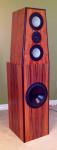
A picture of the system as it looked late in the week, after we'd installed the Benchmark AHB2's on this recent trip in March, 2016, with introductions to the cast of characters...

The secondary "rack", with the digital source gear and power supply batteries and Paul Hynes regulators and chargers:

The Halcro DM88 power amps and specs from the Stereophile review years ago- pretty much state of the art at the time, and still so, though not without contenders now...


Some of the many Scherzinger cables used in the system...


The Ayon Spheris II Preamp, which was on loan to test in the system:

The Ayon uses an unusual Siemens vacuum tube in a non feedback, transformer coupled output configuration with very wide bandwidth...

The Cello Chorale Preamp, which had been sent to Scherzinger for some shielding modifications, but returned without it's power supply to main chases cable, delaying my hearing it until Wednesday....

The Playlist...

And yes, this system was the destination of those Benchmark AHB2's I have been using the last several months and took to Munich with me earlier this month...

And finally, the three main configurations which underwent extensive comparative listening tests:
Setup Number One:

This was the initial default baseline; the DM10 preamp came with the Halcro DM88 amps, which was what my friend was really after; at this point, he had the Chorale back from it's updates, but missing the power connecting cable.
Setup Number Two:

This 2nd setup was using the Ayon Spheris II Preamp, which uses an unusual tube and circuit configuration, and a two chassis setup with separate power supply. we had another similar configuration different brand of tube preamp to try out also, but spent half a day going through the manual and could never get a sound out of it!
Setup Number Three:

This was how I first heard the AHB2's in the system. Not a bad performance at all, but still didn't quite gel for me. Puzzling...
Setup Number Four:

This was the last setup I got to listen to- we had planned to also compare this setup with the Chorale Preamp driving the Halcro amplifiers, but my issues intervened and I was in the hospital that evening.
Next post I'll describe my impressions and experiences with these three setups, and talk a bit more about the common parts of the system setup.
This is about a friends system in Munich, in which a lot of research and trial and error testing has gone on, both to optimize the performance of some of the electronics using auxiliary power systems that can only be called "DIY" compared with what came from the factory.
This is also about listening tests with different equipment substitutions that we did while I was there last week, which were not completed as expected, due to my kidney stone issue, but which were nevertheless intriguing and sometimes startling- and actually never subtle. For anyone configuring their own system, and wanting the best from their speakers, there are lessons at least of examples, if not specifics, to be learned.
This is NOT intended so much as any kind of absolutist equipment recommendation, or even a recommendation for a specific set of DIY mods- how I would like it to be considered is an anecdotal tale about one path that worked well with certain kinds of euipment (probably for rather specific reasons, which I will get to at the proper point), but most especially, a tale about not making assumptions based on component specifications or cost, but realizing that there is no worthwhile substitute for a lot of listening and sometimes a lot of experimentation to get to where you may want to be in your personal quest for musical nirvana. (Those of you looking for musical hell, this isn't your thread, these aren't the components you're looking for, move along now...) :W
Some of you who have built Ardents and subsequently taken some steps in system component upgrades have some idea of where this is going...
To give you a teaser, I'm going to go out on a limb and make a statement like this- even considering so called high end components, there could easily be times one would be more satisfied with the right synergistic front end choices and a set of NatlaliP's than combining the wrong source and front end components with a set of Ardent's or any other high end DIY speaker, or commercial, for that matter. Therein lies a tale, which I will attempt to hint at- if you haven't been through the process, it's likely hard to get it or believe it.
The thing that was interesting about the four listening sessions last week is that in a very brief period it encapsulated quite a range of subjective performance- and that was with the basic source component setup (TotalDAC with reclocking) which was the same for all configurations. And everyone knows preamps are easy---peasy to do right... Right?
The other remarkable things was how far amplifier technology in the market place has come in the last 20 years- now we have a situation where a pair of, dare I use the word, "tiny" amplifiers can be a credible contender against a mammoth sized legend- mammoth in both the deserved reputation and the physical configuration. That, my friends, reminds me to say, "Welcome to the 21st Century". The century of disruption? :W
I don't have time to do all the write up tonight, but I'm going to post a few pictures of the system and the main configuration changes that were evaluated, as well as the "playlist" I chose of cuts I'm very familiar with and could use with some reliability for comparative listening. YMMV, of course, but I bet most of you have similar lists you could put together...
A picture of the system as it looked late in the week, after we'd installed the Benchmark AHB2's on this recent trip in March, 2016, with introductions to the cast of characters...
The secondary "rack", with the digital source gear and power supply batteries and Paul Hynes regulators and chargers:
The Halcro DM88 power amps and specs from the Stereophile review years ago- pretty much state of the art at the time, and still so, though not without contenders now...
Some of the many Scherzinger cables used in the system...
The Ayon Spheris II Preamp, which was on loan to test in the system:
The Ayon uses an unusual Siemens vacuum tube in a non feedback, transformer coupled output configuration with very wide bandwidth...
The Cello Chorale Preamp, which had been sent to Scherzinger for some shielding modifications, but returned without it's power supply to main chases cable, delaying my hearing it until Wednesday....
The Playlist...
And yes, this system was the destination of those Benchmark AHB2's I have been using the last several months and took to Munich with me earlier this month...
And finally, the three main configurations which underwent extensive comparative listening tests:
Setup Number One:
This was the initial default baseline; the DM10 preamp came with the Halcro DM88 amps, which was what my friend was really after; at this point, he had the Chorale back from it's updates, but missing the power connecting cable.
Setup Number Two:
This 2nd setup was using the Ayon Spheris II Preamp, which uses an unusual tube and circuit configuration, and a two chassis setup with separate power supply. we had another similar configuration different brand of tube preamp to try out also, but spent half a day going through the manual and could never get a sound out of it!
Setup Number Three:
This was how I first heard the AHB2's in the system. Not a bad performance at all, but still didn't quite gel for me. Puzzling...
Setup Number Four:
This was the last setup I got to listen to- we had planned to also compare this setup with the Chorale Preamp driving the Halcro amplifiers, but my issues intervened and I was in the hospital that evening.
Next post I'll describe my impressions and experiences with these three setups, and talk a bit more about the common parts of the system setup.











Comment